

Fabric Architecture as Memory Map
Do Ho Suh is currently exhibiting his Walk the House exhibition in partnership with Genesis at the Tate Modern through October 26th. The survey spans three decades of work, positioning architecture as both structure and story.
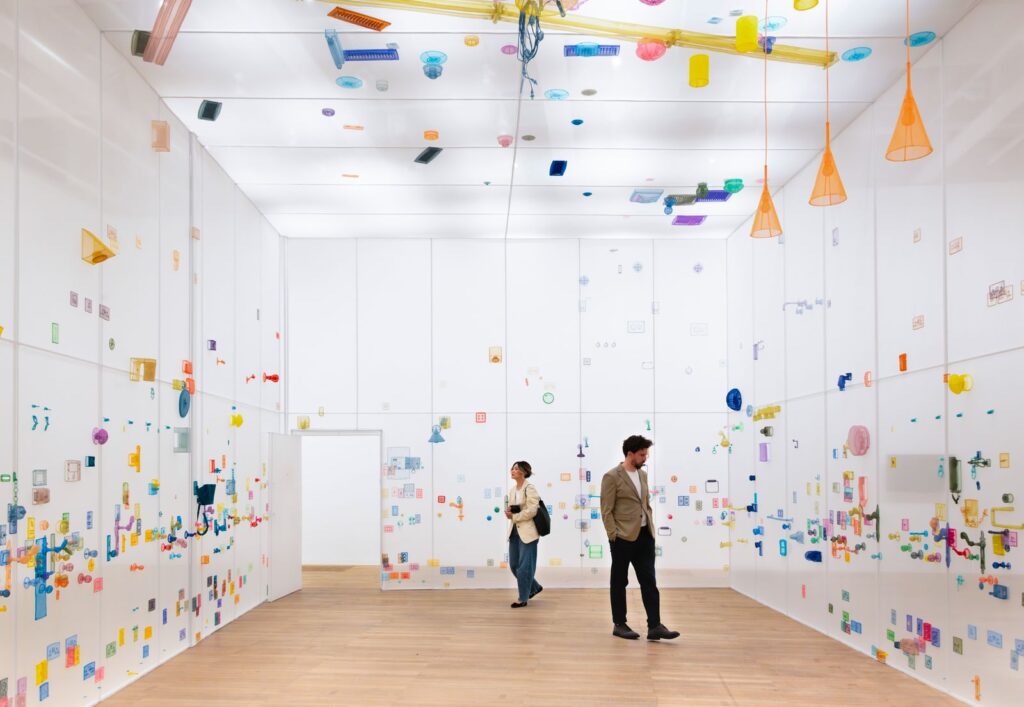
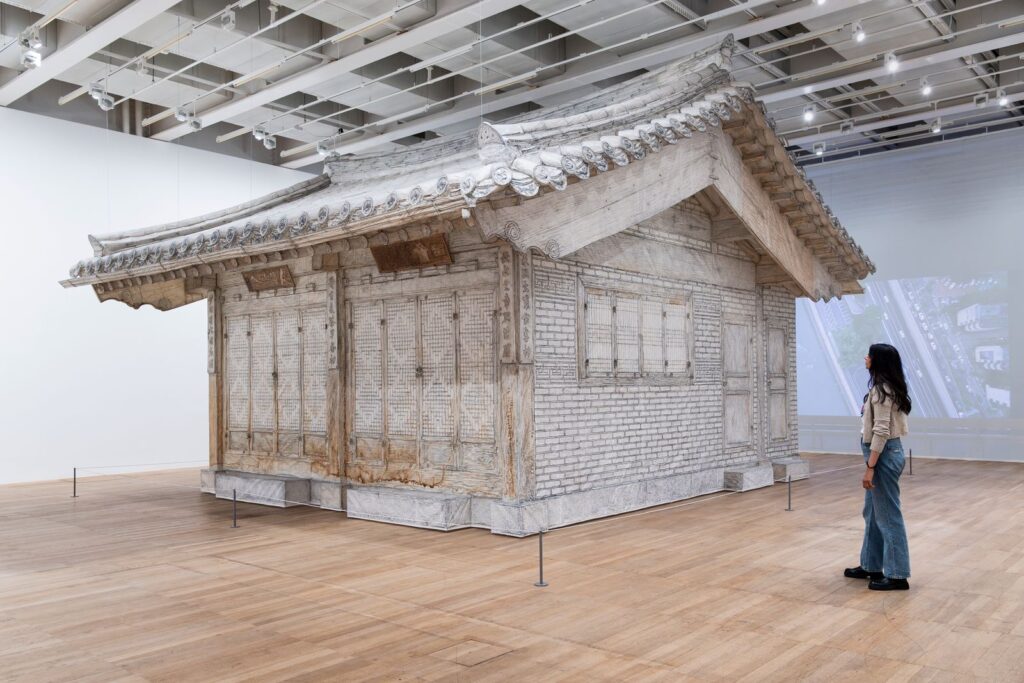
At the heart of the exhibition are Suh’s large-scale fabric installations, suspended in translucent hues, which recreate the spaces he has lived in across Seoul, New York, and London at a precise 1:1 scale. As visitors move through these works, they are invited to walk through memory: corridors, stairwells, and rooms rendered as ghostly shells, stitched from polyester mesh like three-dimensional drawings. Their material lightness underscores a psychological weight, raising questions of belonging, migration, and what ultimately defines home.
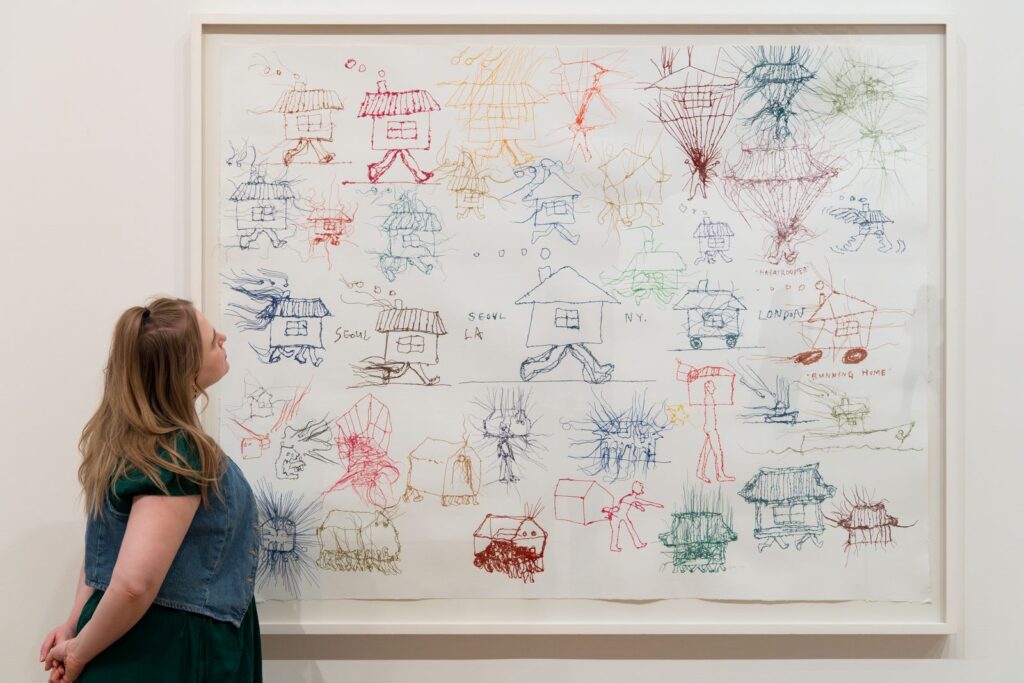
Beyond fabric, the exhibition further demonstrates Suh’s range. Rubbing projects transform walls into graphite impressions, collapsing buildings into portable scrolls. In addition, video works employ photogrammetry, treating apartment blocks as archives of human passage. Thread drawings, dissolving paper sculptures, and photographic mosaics extend the same pursuit: exploring how space preserves, yet resists, memory.
For artists, designers, and architects alike, Suh’s work prompts new thinking about transparency, impermanence, and emotional resonance. In hospitality or cultural projects, “fabric architecture” suggests that space can be both structural and experiential. Taken together, the works remind us that architecture can carry memory as much as material.
As the artist notes, “The space I’m interested in is not only a physical one, but an intangible, metaphorical, and psychological one.” Ultimately, the exhibition lingers as a reminder that the places we inhabit are less about permanence than about the traces we carry forward.
Main image is Do Ho Suh portrait by Gautier Deblonde © Gautier Deblonde
all images are courtesy of Tate Modern

Ready to spec what you see? Try Designer Pages PRO free for 30 days.
Related Posts


Leave a Reply