

When Stone Becomes the Structure
Designers have been quietly rewriting the rules of stone for years. What’s changed is scale and confidence. The 2026 Luxury Surface Report from Artistic Tile reflects a collective shift toward natural stone that does more, thicker edges, integrated sinks, bolder color stories. This is not decorative stone. It’s material used with intent.
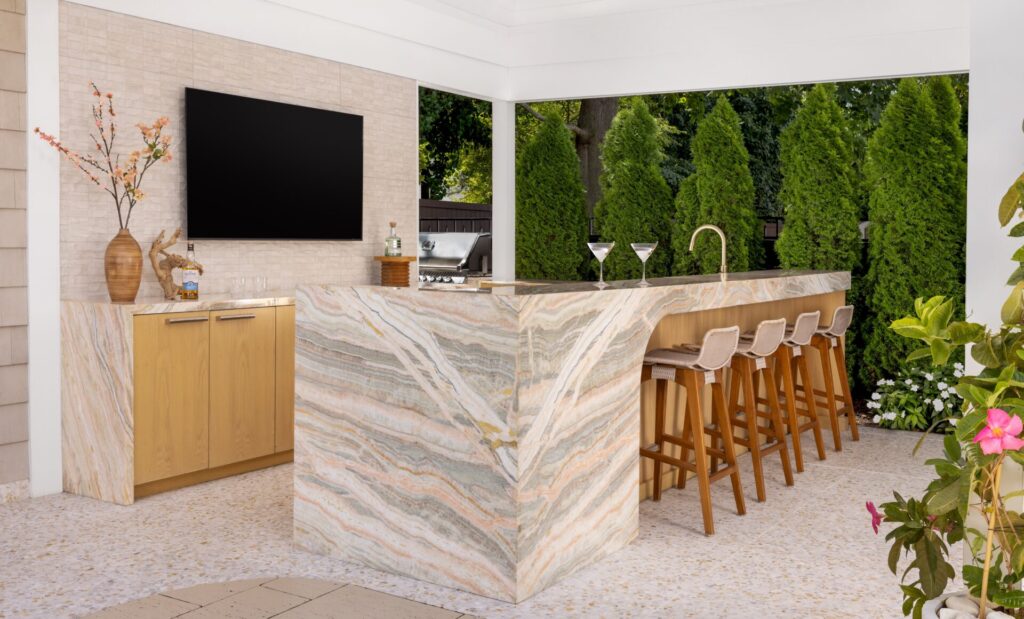
Luxury stone surfaces are moving beyond cladding and into composition. Slabs are carved into tubs and vanities that read as permanent fixtures rather than applied finishes. Edge treatments become moments of authorship. Stone behaves like furniture, anchoring a room through mass, proportion, and craft. For specifiers, this evolution feels less like a trend and more like a recalibration.
The numbers support the instinct. More than 80 percent of interior designers report increased use of natural stone slabs over the past decade, citing durability and unique aesthetic as primary drivers. White remains dominant, but blues, greens, and warmer neutrals are close behind. These tones feel especially relevant in shared environments, where atmosphere and material presence carry equal weight. Luxury stone surfaces hold visual authority without relying on excess detail.
Custom mosaic work is also expanding in scope. No longer limited to accent moments, mosaics are becoming graphic, immersive, and architectural. Pattern and surface merge into something more spatial, reinforcing stone’s role as a defining element rather than embellishment. It’s an approach that prioritizes longevity and visual clarity.
Pricing remains a consideration, but the conversation has shifted. Designers are speaking less about cost and more about distinction. In commercial interiors, luxury stone surfaces communicate permanence, craft, and confidence. Used decisively, they don’t decorate a space. They structure it.
Images Courtesy of Artistic Tile


Ready to spec what you see? Try Designer Pages PRO free for 30 days.
Leave a Reply