

Stone Forest and the Art of the Vessel Sink
In the latest additions to Stone Forest’s lineup, the Tazza and Forma vessels read less like fixtures and more like carved objects placed with intent.
The Tazza Vessel leans into presence. A classic round basin, generously proportioned, it showcases the inherent drama of stone. Ocean onyx swirls with saturated blues and greens, while Verde Indio pulls in deep, grounded tones with graphic veining. Meanwhile, pink onyx softens the composition. When backlit, the material begins to glow rather than simply reflect. As a result, the effect feels atmospheric, not decorative.
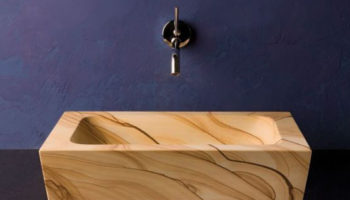
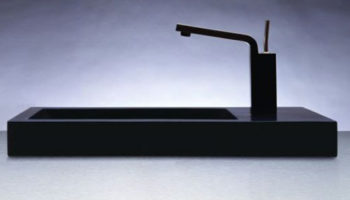
By contrast, Forma edits the gesture. Its rectangular profile in Grigio sandstone feels quieter, more architectural. Edges soften just enough to avoid rigidity, and the surface carries a fine grain that diffuses light while anchoring the piece visually. Because of this, it feels integrated rather than placed, a useful distinction when specifying for projects where restraint matters.
Both sinks rely on hand-carving from solid blocks of natural stone. That process shows. Slight variations in edge, tone, and texture resist the uniformity of mass production. For commercial interiors, that distinction matters, since it signals permanence rather than trend.
At the same time, designers continue to seek materials that read as authentic and tactile. These vessels align with that shift, similar to how stone moves beyond flat applications in projects like Stone Forest’s Verde Indio collection, where surface becomes experience.
Ultimately, when specified thoughtfully, Tazza and Forma don’t just complete a vanity. Instead, they set the tone for the entire room.
Images Courtesy of Stone Forest


Ready to spec what you see? Try Designer Pages PRO free for 30 days.
Related Posts
Leave a Reply