
When the Fixture Moves, the Room Does Too
Most chandeliers ask you to look up. LUMIAC, the kinetic lighting installation from Andrea Mancuso Studio, asks you to wait and watch.
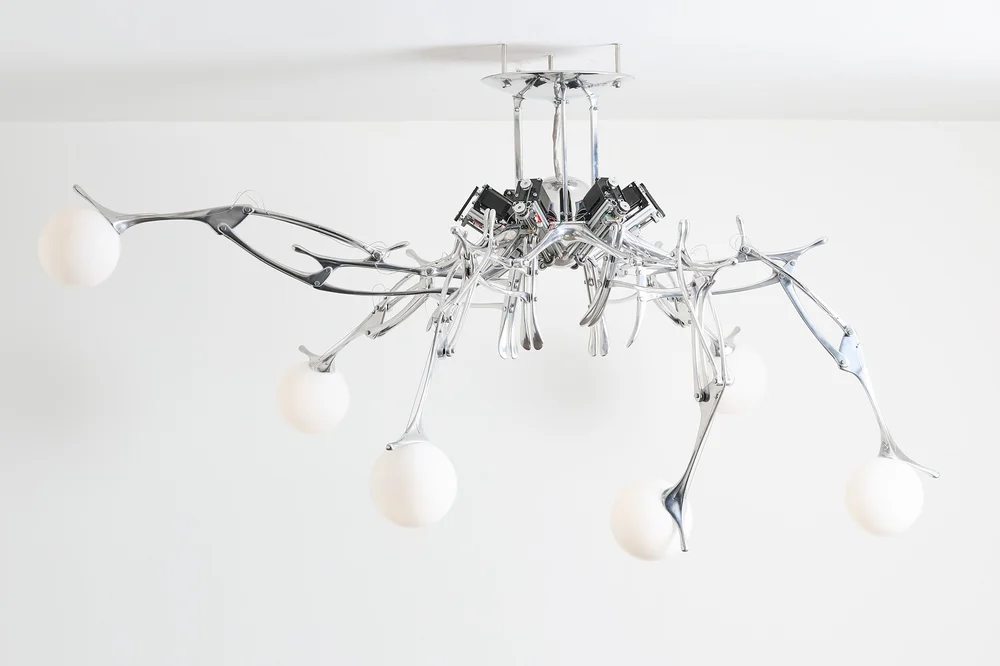
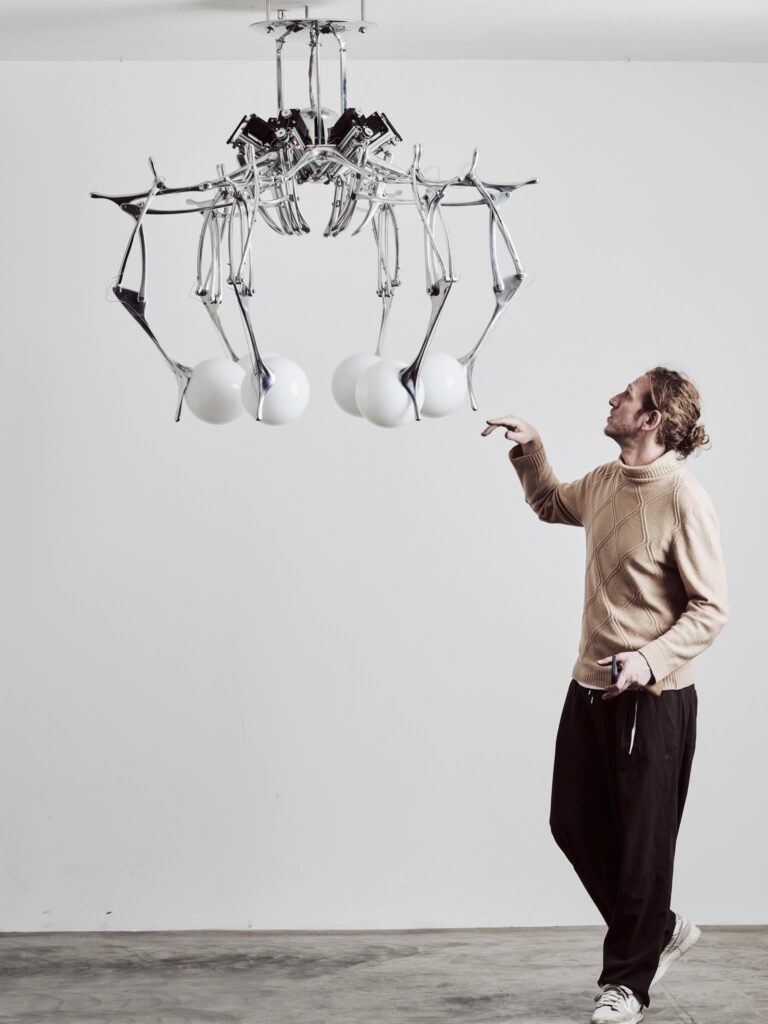
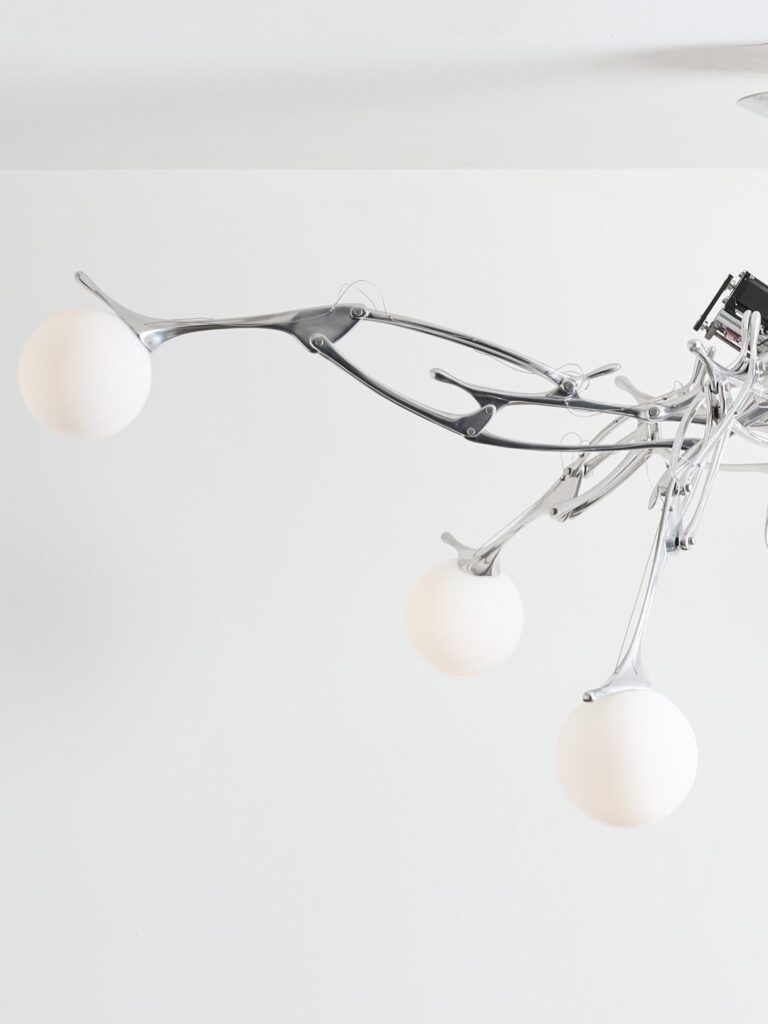
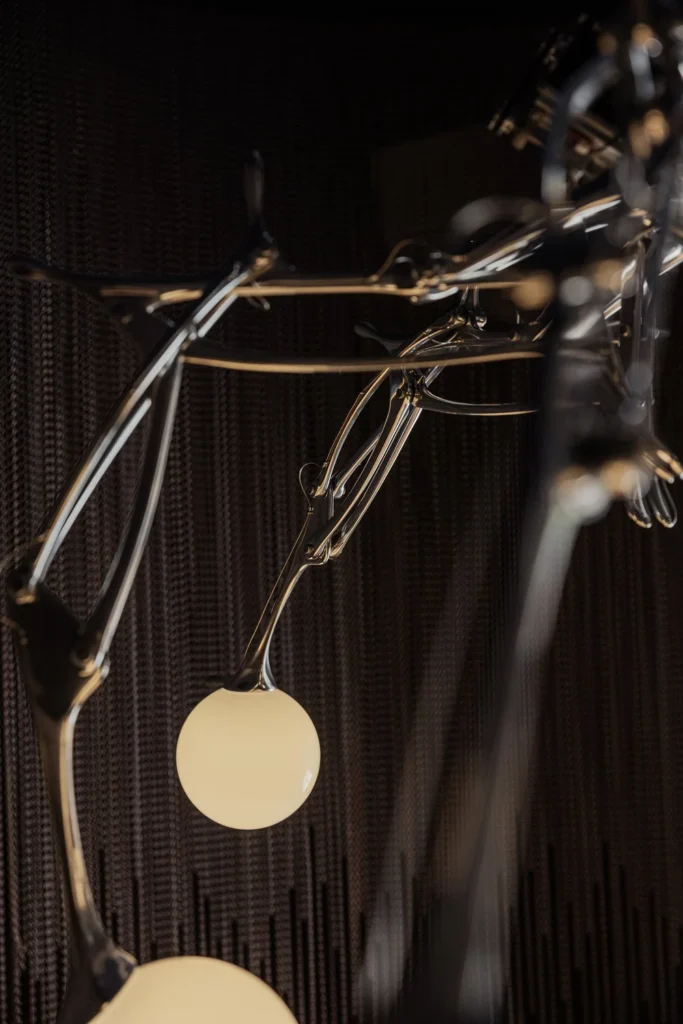
The name is the first clue: Light Unit Mechanized Intelligence Apparatus Computer, a deliberate echo of MANIAC, one of the first autonomous computers of the 1950s. What hangs from the ceiling looks more creature than fixture. Cast aluminium arms extend from a central spine, articulated like bones. Blown-glass spheres cluster at their ends, glowing softly. Integrated motors shift the whole assembly over time, dimming and repositioning through a remote-controlled system. No two moments are identical.
For designer Andrea Mancuso, Leonardo da Vinci’s anatomical studies served as a reference point, the conviction that observing the body and inventing machines were part of the same inquiry. That lineage is legible in the hardware. Polished joints catch light at odd angles. Meanwhile, the motor housing sits exposed at center, unapologetic. It looks engineered because it is.
For a lobby, a performance venue, or a hospitality space where atmosphere is part of the brief, LUMIAC offers something rare. A kinetic lighting fixture that behaves more like a presence than a product. It moves. It shifts. It does not hold still. Like the Tripop portable rechargeable lamp by Matteo Cibic, it treats light as something closer to performance than function.
Images Courtesy of Andrea Mancuso Studio | Photography Credit: Filippo Pincolini and Alejandro Ramírez Orozco



Ready to spec what you see? Try Designer Pages PRO free for 30 days.
Related Posts


Leave a Reply